

The 'F' Word
In his revised thinking/grudging admission about Trump, Jonathan Rauch inadvertently proves that progressive presidents were fascists.

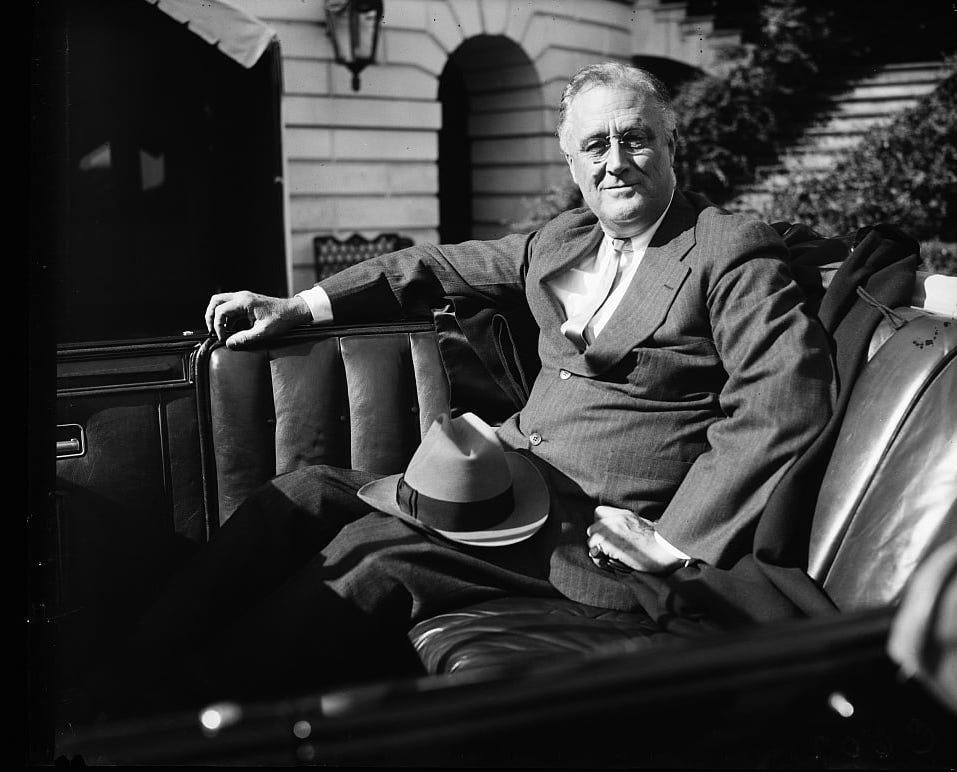
I am much interested and deeply impressed by what [Mussolini] has accomplished and by his evidenced honest purpose of restoring Italy.
I don’t mind telling you in confidence that I am keeping in fairly close touch with that admirable Italian gentleman.
—Quotations of FDR
If you asked me to call it as I see it, I’d say President Trump is fasc-ish, fascist lite, or “semi-fascist.” And until recently, writer Jonathan Rauch (whom I’ve long admired) would have agreed with my assessment.
But in his Atlantic piece, “Yes, it’s Fascism,” Rauch pulls a Jason Stanley. That is, he comes up with his own laundry list of purportedly fascist indicators to prove that President Trump is, indeed, a fascist, which suggests Trump is uniquely evil in American history. He writes:
“So the United States, once the world’s exemplary liberal democracy, is now a hybrid state combining a fascist leader and a liberal Constitution;…”
Note his use of the word now, as if one could not characterize America this way for over a century. At least Rauch can resume attending all those Beltway cocktail parties.
You see, Rauch claims he had been reluctant to use the ‘f-word’ about Trump. But no more. He has officially joined the chorus of Blue Sky bubblers, media hysterics, and, eh hem, ‘protestors’ in a full-throated outcry against one administration.
I have neither the inclination nor the space to defend Trump against the charge, even though on several of Rauch’s eighteen points, Trump’s purportedly fascist behavior is at least arguable, which is to say not fascist according to Rauch’s criteria. Some of Rauch’s points concern what Trump says, which we can compare with what other presidents said privately or actions they have taken.
So with this, I reveal my bias.
I admit I dislike politicians and demagogues as a category. So, when writers like Rauch play historical umpire against just one such creature, my skepticism needle pings to the red.
If you have an Atlantic subscription, I encourage you to read Rauch’s piece. You might agree that some of Rauch’s points resemble Trump’s style more than actual fascism, while others are stretched to fit. Still, others are on point, which means Rauch offers grains of truth to the mix.
My critique?
In setting out to prove that Trump is a fascist, Rauch proves that the President is just an odd species of progressive and that past progressive presidents were fascist, too. Progressivism, after all, is a form of fascism.
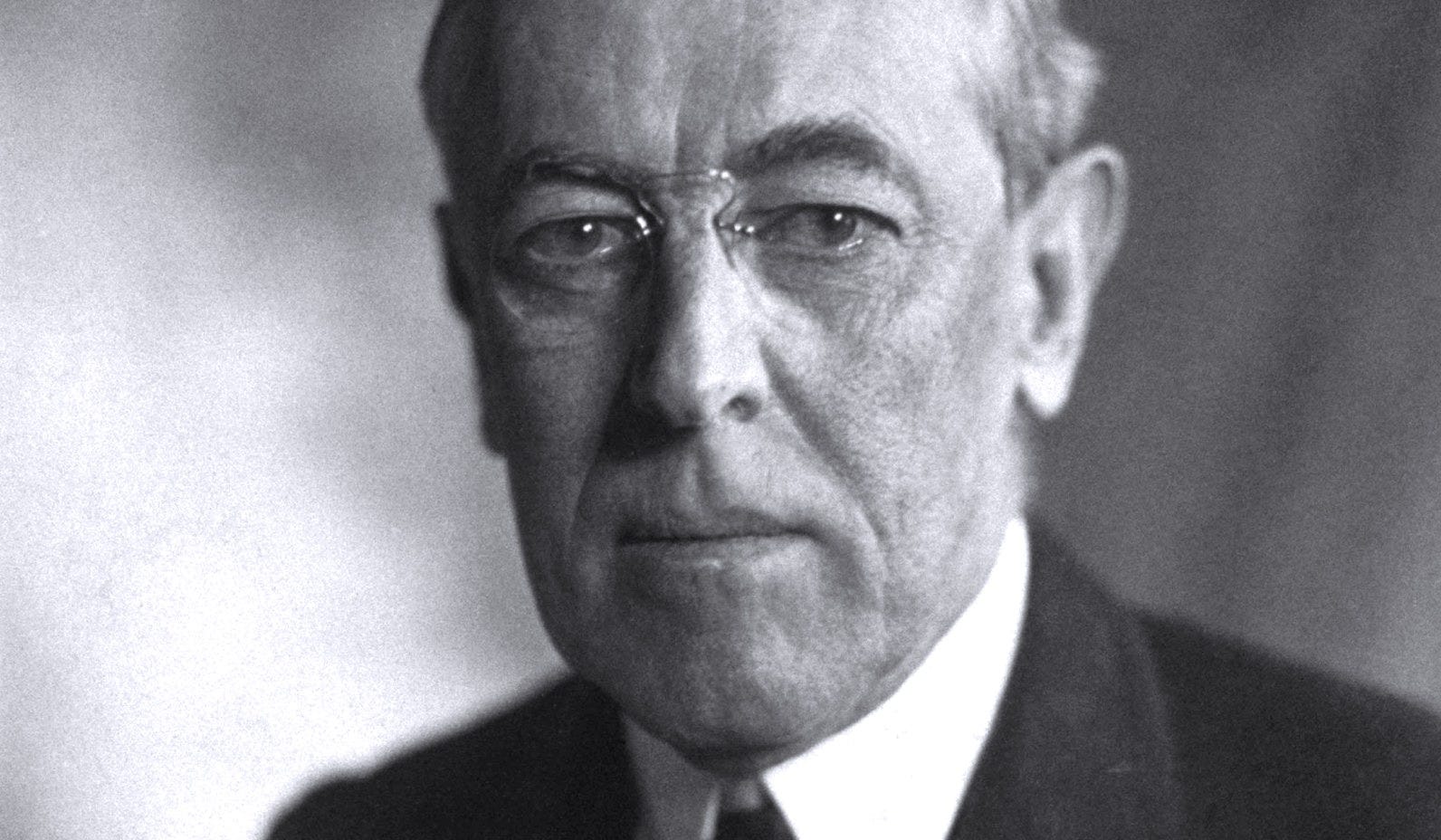
I’ll use the four horsemen of progressivism—Woodrow Wilson, FDR, Barack Obama, and Joe Biden—as comps against Rauch’s list of 18 purported features of fascism.
Demolition of Norms
Wilson dramatically expanded executive power through wartime measures. The Espionage Act (1917) and Sedition Act (1918) suppressed dissent and centralized authority far beyond peacetime precedent. His administration also re-segregated federal offices, directly challenging egalitarian principles. Generally, Wilsonian interventionism was the first time the US sent large numbers of troops (over 2 million) abroad to fight in a major war not on its own soil, not of its own making, and not primarily for either territorial gain or direct self-defense. Prior to the Great War, the US had had a norm of avoiding “entangling alliances,” and had informally established the Monroe Doctrine.
FDR attempted to pack the Supreme Court after unfavorable rulings, threatening judicial independence. His New Deal bypassed traditional legislative processes, concentrating unprecedented peacetime authority in the executive branch. One could argue that FDR’s presidency demolished more norms than any prior president, perhaps with the exception of Wilson’s.
Obama governed extensively by executive action when Congress wouldn’t cooperate. DACA implemented a sweeping immigration policy without congressional approval, setting a precedent that critics warned would invite future executive overreach. Due process for US citizens had also been a norm that Obama violated through extra-judicial killings and drone strikes.
Biden’s vaccine mandates pushed executive power into private employment decisions. He pursued student loan forgiveness through an executive order despite questionable legal authority, and the Supreme Court ultimately blocked the action. Biden also politicized the national security regime in a manner that weaponized it against his partisan adversaries, including ordinary US citizens.
Glorification of Violence
Wilson tolerated vigilante groups like the American Protective League, which intimidated suspected disloyal citizens. His screening of “Birth of a Nation” at the White House lent presidential prestige to a film that romanticized the Klan and justified violence against Black Americans.
FDR’s WWII rhetoric justified large-scale violence as necessary defense, normalizing military action and enabling policies like Japanese internment under national security claims.
Obama dramatically expanded drone warfare, justified targeted killings as “precise” and legal despite significant civilian casualties. This rhetoric portrayed remote executions without trial as legitimate self-defense, expanding executive authority to kill American citizens abroad. Is downplaying deadly violence a form of glorification?
Biden mocked armed citizens’ ability to resist government tyranny, stating they would “need F-15s” to challenge federal power—an implied threat of overwhelming force against domestic opposition by gun owners and libertarian critics of overwhelming state power. Recall Biden insisting on multiple occasions that he would take Trump to “take him behind the gym” and “beat the hell out” of him. During a campaign stop at a Fiat-Chrysler plant in Detroit, Biden argued with a pro-gun worker who accused him of trying to “end our Second Amendment right.” After calling the worker “full of shit” and a “horse’s ass,” Biden escalated: “Don’t tell me that, pal, or I’m going to go outside with you, man.” / “Do you want to go outside?”
Might is Right
Wilson imposed conscription, suppressed opposition, and intervened militarily in Mexico, Haiti, and the Dominican Republic, as well as in World War I, prioritizing state power over individual liberty and national sovereignty. He used soaring rhetoric to cover his Thrasymachian approach to international relations.
Obama’s unilateral actions—the Iran nuclear deal, interventions in Libya and Syria—imposed American will with minimal congressional input. His administration’s critical role in Ukraine’s 2014 upheaval contradicted is earlier willingness to thaw with Putin, and demonstrated his willingness to destabilize foreign governments. (And let’s not forget about all the drone strikes.)
Biden engaged in a prolonged proxy war with Russia, threatened to destroy the Nord Stream pipeline (which happened), and reportedly thwarted early peace negotiations in Ukraine—prioritizing US geopolitical objectives over regional stability, European energy security, and the mitigation of violence in the region.
Politicized Law Enforcement
Wilson enabled Attorney General Palmer to conduct mass raids targeting radicals, socialists, and immigrants with minimal due process, weaponizing the Justice Department against political opponents.
FDR used the FBI under Herbert Hoover to surveil political opponents, including Charles Lindbergh, the America First Committee, and anti-interventionist senators whose only crime was opposing war.
Obama’s IRS targeted conservative groups seeking tax-exempt status. His administration attempted to cover up the Fast and Furious scandal. Most seriously, senior officials collaborated with intelligence agencies to promote the Russia collusion narrative against the incoming Trump, relying on the discredited Steele dossier despite numerous internal objections by intelligence analysts.
Biden’s DOJ pursued low-level January 6 participants and school board protesters with vigor while taking a lenient approach to the 2020 riots. The administration imprisoned Steve Bannon and Peter Navarro on contempt charges while ignoring similar defiance by administration allies. Shitposter Douglass Mackey was prosecuted and convicted for posting political memes during the 2016 election.
Dehumanization
Wilson promoted racist policies, re-segregated the federal government, and screened pro-KKK propaganda at the White House. His rhetoric portrayed immigrants and dissenters as threats to national unity, justifying their persecution. As a governor, Wilson signed his state’s 1911 forcible sterilization law, which targeted ‘the hopelessly defective and criminal classes.’ His hierarchist, social-Darwinist views are well known.
FDR interned Japanese-Americans after portraying them as inherent security threats, stripping them of humanity and constitutional protections. He described Japanese immigrants as “not capable of assimilation” and claimed that mixing “Asiatic blood” with “European or American blood” produced “unfortunate results” in most cases. He also denied entry to Jewish refugees fleeing Nazi Germany, and there are multiple accounts of FDR’s antisemitic words and actions. In private comments about Jews, FDR expressed pride in having “no Jewish blood,” supported quotas on Jews at Harvard, spoke of Jews in Poland as provoking antisemitism by their economic role, and favored “spreading the Jews thin” around the world so they would not be numerous in any one place.
Obama dramatically expanded drone strikes across Pakistan, Yemen, and Somalia. Internal military jargon reportedly referred to casualties as “bugsplat,” which he apparently tolerated. Obama himself remarked, “Turns out I’m really good at killing people,” and joked about drone strikes at the 2010 White House Correspondents’ Dinner—a chilling casualness about taking human life. Echoing Hilary Clinton’s “basket of deplorables” comment, Obama also described his opposition voters as “clinging to guns or religion,” to delegitimize their concerns.
Biden repeatedly labeled political opponents “threats to democracy” and “MAGA extremists,” rhetoric that made many voters feel targeted by federal law enforcement, particularly the Department of Homeland Security. (And some were, indeed, targeted.) Ordinary, nonviolent protestors of January 6th were confined for long periods in pre-trial detention, simply for having wandered onto the Capitol Grounds, or walking—invited by police—into the Capitol building (a misdemeanor). The idea was to make examples of “insurrectionists,” not grandmothers and concerned citizens.
Police-State Tactics
Wilson oversaw mass surveillance, mail censorship, and arrests under the Espionage and Sedition Acts. His administration supported citizen vigilance groups that spied on neighbors.
FDR expanded federal surveillance during WWII, including wiretapping and propaganda control, normalizing intrusive government monitoring. Of course, rounding up Japanese-Americans into camps is pretty much a police-state tactic.
Obama’s NSA mass surveillance programs, revealed by Edward Snowden, collected Americans’ communications and data on an unprecedented scale, exemplifying police-state infrastructure—or perhaps more accurately, a totalitarian one. James Clapper then allegedly lied to Congress about it.
Biden expanded FBI and DHS monitoring of social media for “misinformation” and “disinformation,” which overwhelmingly tilted partisan. His administration built what critics call the Censorship-Industrial Complex—a network of government agencies, NGOs, and tech platforms collaborating to suppress disfavored speech. Biden Administration officials routinely threatened social media companies, pressuring them to deplatform users and suppress or ban protected speech.
Undermining Elections
Wilson criminalized criticism of the government during WWI, using these laws to jail political opponents like Socialist presidential candidate Eugene V. Debs.
FDR’s surveillance of political opponents chilled opposition organizing. New Deal agencies rewarded political allies and punished opponents, blurring the line between governance and political campaign.
Obama’s DOJ deprioritized voter fraud prosecutions while emphasizing voter suppression narratives. He and his administration dismissed popular election security measures as partisan and discriminatory, weakening public confidence in electoral integrity even as the extent of voter fraud remained disputed. Whistleblowers have claimed Obama’s CIA knew about or took possession of election-rigging technologies involving Venezuela, and might have used them to tip elections to the left in multiple countries, including the US. (If true, though as yet unconfirmed, such actions would almost certainly cast doubt on Obama’s commitment to election integrity.)
Biden showed limited interest in auditing election systems from which he benefited in 2020. He labeled election fraud claims as “threats to democracy” rather than disputed facts warranting investigation. Suspicions about the 2020 election persist, and more evidence of irregularities is emerging. He labeled state election integrity laws “Jim Crow 2.0,” equating reasonable election security with racist oppression.
What’s Private Is Public
Wilson’s wartime controls nationalized industries such as railroads, censored private communications, and intruded on personal loyalties through surveillance and mandatory loyalty oaths.
FDR’s New Deal agencies intervened extensively in private business and agriculture, mandating public disclosures and picking economic winners and losers in ways resembling Mussolini’s corporatism. World War II production intensified this pattern, giving rise to the military-industrial complex. In 1933, FDR confiscated Americans’ property. He signed Executive Order 6102, which forbade “the hoarding of gold coin, gold bullion, and gold certificates within the continental United States.”
Obama’s ACA required personal health data sharing and employer mandates. Whole Foods CEO John Mackey called the exchanges “fascism” on NPR, noting that Americans were forced to transact with insurance companies or face penalties. His administration’s financial regulations increased government oversight of private transactions. The auto industry bailout gave the federal government control over management decisions, ownership stakes, and labor outcomes. Mass data collection swept up private communications of citizens and companies. And of course, Obama’s “You didn’t build that” speech emphasized businesses as an extension of the state, which is very Mussolini.
Biden proposed that the IRS monitor bank transactions over $600. His OSHA rule attempted to require private employers to enforce vaccination. He empowered the CDC to block private landlords from collecting on leasing agreements. His student loan forgiveness program sought to cancel private contractual obligations en masse and shift the tab to taxpayers. Industrial policy through CHIPS and IRA came with heavy conditional funding tied to labor, climate, and equity goals, subordinating private business decisions to state priorities.
Attacks on News Media
Wilson used the Espionage and Sedition Acts to prosecute and imprison press critics, censoring publications deemed disloyal to suppress opposition journalism.
FDR criticized “economic royalists” in the press, attempted to regulate radio and newspapers, and surveilled media outlets he disliked. FDR did not suppress the press through outright censorship in peacetime (unlike wartime measures or his court-packing push), but he used his bully pulpit, regulatory leverage, and public rhetoric to discredit and marginalize critics. Historians refer to such actions as FDR’s “war on the press.” Historian David Beito writes that “CBS Vice President Henry A. Bellows said that ‘no broadcast would be permitted over the Columbia Broadcasting System that in any way was critical of any policy of the Administration.’” Add to that that, over a nearly three-month period at the end of 1935, FCC and Black Committee staffers searched through large stacks of telegrams in Western Union's D.C. office. Operating with virtually no restriction, they read the communications of sundry lobbyists, newspaper publishers, and conservative political activists as well as every member of Congress.
Obama’s administration prosecuted whistleblowers and subpoenaed journalists’ records. Officials labeled Fox News illegitimate. Prominent 2013 scandals involving surveillance of journalists—the seizure of Associated Press phone records and the monitoring of Fox News correspondent James Rosen—were carried out by the Department of Justice (DOJ) and FBI through targeted subpoenas, search warrants, and court orders.
Biden called out “disinformation” from certain media outlets and supported illiberal measures against social media platforms hosting ordinary citizens. His administration threatened Twitter and Facebook, pressured Amazon to remove certain books, and NIH officials threatened a “takedown” of non-profit media organizations critical of Biden-era COVID policies. Hiring Nina Jankowicz to run what was effectively a Ministry of Truth had a chilling effect on dissenting media.
Territorial and Military Aggression
Wilson ordered military intervention in Mexico (1914, 1916), led America into WWI, and pursued aggressive global interventionism through his vision for the League of Nations.
FDR opposed the Ludlow Amendment, which would require a referendum before military intervention when the US was not first attacked, asserting the need for executive flexibility to protect American interests abroad, implying a threat of intervention if needed. The pre-World War II lend-lease program and naval actions pushed America toward conflict. FDR set in motion the military-industrial complex and established American territorial oversight and military presence.
Obama launched military interventions in Libya and Syria, dramatically expanded drone strikes across multiple countries, and whose officials—including Assistant Secretary of State Victoria Nuland—orchestrated Ukraine’s 2014 color revolution, toppling the democratically elected government of Viktor Yanukovych.
Biden continued military aid to Ukraine, prolonging a bloody war rather than encouraging negotiations, threatened to destroy the Nordstream pipeline (where an action followed), and continued strikes across the Middle East. Recall that Biden was also Vice President during the Ukraine Color Revolution of 2014, and was likely involved in corrupt agreements with the Ukrainian energy company Burisma. Biden threatened Ukraine with the suspension of billions in foreign aid after calling for the ouster of Prosecutor General Viktor Shokin, who was investigating the company from which his son Hunter had received millions.
Transnational Reach
Wilson championed the League of Nations to extend U.S.-led international governance globally, which Rauch would argue is anti-fascist, despite how removed and unaccountable transnational organizations are to the electorate. He supported Carranza’s revolutionary government in Mexico despite its authoritarian practices, demonstrating a willingness to legitimize illiberal regimes when convenient. He intervened militarily in multiple states in the Caribbean and Central America, including Haiti, Honduras, the Dominican Republic, and Nicaragua.
FDR established the UN and post-WWII alliances, extending American influence globally and setting the stage for postwar imperialism. Cabinet members openly admired Soviet practices while FDR praised Mussolini. At Yalta, he accepted Soviet domination of Eastern Europe, normalizing the idea that tyranny is acceptable when strategically useful—a precedent that haunted Cold War policy.
Again, it’s not clear why transnational organizations are not fascist and have provided aid to and cover for fascist regimes worldwide, despite so little voter accountability. These include Mussolini’s Italy, which was part of the League of Nations; Franco’s Spain, which was admitted to the UN in 1955; and the Peronists of Argentina and Salazar’s Portugal, which were among the first UN members. Putin’s Russia has been a Security Council member, and Iran’s mullahs have held leadership roles in the UN’s Human Rights Council.
Obama pursued the TPP and the Paris Agreement to advance transnational economic and climate governance. He created and funded global censorship networks, which one might call transnational fascism. The Iran nuclear deal sent billions of taxpayer dollars to a brutal regime. Obama also praised Cuban healthcare and education while minimizing concerns about Putin’s authoritarianism, dismissing warnings with his “the 1980s called” remark.
Biden rejoined the Paris Accord and the WHO, pushed a global minimum tax, and led alliances against China and Russia. His administration collaborated with illiberal actors within ostensibly liberal governments to architect a global content-moderation censorship regime, including the Digital Services Act (DSA) in Europe and the Online Safety Act in the UK. Biden’s unprecedented sanctions and asset freezes against Russia prompted many countries to accelerate BRICs de-dollarization efforts. He cozied up to Volodymyr Zelenskyy despite corruption and illiberal domestic actions, including suspension of Ukrainian elections and the shutdown of churches. After campaigning on treating Saudi Arabia as a “pariah,” he sought rapprochement for oil, marked by an embarrassing fist-bump moment with the Saudis.
Blood-and-Soil Nationalism
Wilson promoted “100% Americanism,” emphasizing loyalty to native soil and culture while targeting “hyphenated” immigrants as inherently disloyal. Wilson was a well-known supporter of eugenics and was irredeemably racist.
FDR emphasized American exceptionalism while denying entry to Jews fleeing the Holocaust. He fomented hysteria about Japanese-Americans and rounded them up into internment camps based on ethnic identity. Let’s not forget his comments about his desire for “blood of the right sort.”
Obama promoted inclusive nationalism but used careful language, warning against illegal immigration. Ironically dubbed the “Deporter in Chief,” he holds the record for deportations, though this doesn’t indicate any blood-and-soil orientation.
Biden reversed both Obama’s and Trump’s immigration policies, almost certainly to shore up population in states losing congressional seats due to census reapportionment. His actions make him the least nationalist of the group by far, but decades of gaffes and racist comments have prompted many to question his commitment to racial equality.
White and Christian Nationalism
Wilson was openly racist, re-segregating federal offices, supporting KKK-friendly narratives, and viewing America through a white Anglo-Saxon Protestant lens. (Note that neither Mussolini’s fascism nor Hitler’s nazism were overtly Christian nationalist, and only Hitler wanted to create a white ethnostate.)
FDR was privately anti-Semitic, denying entry to Jews fleeing Germany. He expressed pride in having “no Jewish blood” and supported quotas on Jews at Harvard. He told cabinet members there were “too many Jews among federal employees in Oregon” and denied advisor Benjamin Cohen a Treasury position, fearing “too much Jewish representation.” On immigration, he wrote that America should admit only people with “blood of the right sort.” He described Japanese immigrants as “not capable of assimilation” and claimed mixing “Asiatic blood” with “European or American blood” produced “unfortunate results.”
Obama opposed such nationalism, emphasizing diversity and inclusion. However, his mass deportations under Tom Homan weren’t efforts to protect white nationalism but reflected his border security priorities. Those who think mass deportation of illegal migrants is “fascist” must surely apply this standard to the “Deporter in Chief.” (Otherwise, Obama’s policy was not fascist per se.)
Biden critiqued white supremacy and pursued equity policies to counter Christian nationalist elements, despite his own history of racist remarks, including his statement that “you ain’t black” if you don’t vote for him and his praise for segregationists earlier in his career. He became the DEI president, and his administration was openly hostile to white and Christian nationalism. While these efforts don’t support the idea that institutionalized antifascism took on fascist tactics, including his creation of the Disinformation Governance Board.
Mobs and Street Thugs
Wilson encouraged patriotic vigilante groups like the American Protective League, which acted as quasi-official enforcers against suspected disloyalty.
FDR refused to support federal anti-lynching laws despite multiple bills passing the House in the 1930s. He feared Southern Democrats would kill the New Deal if he pushed civil rights protections.
Obama responded to the Ferguson (2014) and Baltimore (2015) riots by emphasizing racial grievances before prioritizing order. Nationwide protests from 2014 to 2016 were framed as expressions of frustration rather than lawlessness requiring immediate control. He distinguished peaceful protest from violence in Black Lives Matter demonstrations, but was criticized for emphasizing empathy before law enforcement.
Biden condemned violence in protests but treated January 6 participants far more harshly than 2020 BLM rioters, despite the latter lasting longer, causing more damage, and resulting in far more deaths. (When it comes to the perception of violence by partisans, one person’s street thug is another’s freedom fighter.)
Leader Aggrandizement
Wilson cultivated an image as a moral crusader and global savior. Wartime propaganda elevated his personal leadership, and he fancied himself a technocratic wizard who needed the power to grow the administrative state.
FDR’s fireside chats and four-term presidency built a well-known cult-like following, personalizing the presidency in unprecedented ways. Even though the fireside chats and campaigns were self-aggrandizing, they came with a halo effect. Soaring rhetoric covered highly illiberal actions he took during his tenure.
Obama’s “Hope and Change” campaign intensely personalized leadership. His extensive use of executive actions amplified presidential power and centered policy achievements around his personal authority.
Biden maintained a lower profile but tied “Build Back Better” to his personal vision, with curious parallels to “Make America Great Again.” It’s not clear that Biden was more self-aggrandizing than other politicians in history, and this makes Biden the least aggrandizing of the four horsemen reviewed here.
Alternative Facts
Wilson ran for reelection in 1916, boasting, “He kept us out of war,” then immediately entered WWI. His claim that “the world must be made safe for democracy” masked financial interests, as American banks had lent enormous sums to the Allies. The banks faced significant losses if Britain lost. His Committee on Public Information produced systematic propaganda through posters, films, pamphlets, and “Four Minute Men” gave pro-war speeches nationwide.
FDR used propaganda during the Depression and the war to present optimistic narratives that overstated the facts. He claimed his court-packing plan was needed because elderly justices were overworked. He dramatized the banking crisis to consolidate authority through the Emergency Banking Act, though the crisis had begun stabilizing before his inauguration. In 1940, he promised: “Your boys are not going to be sent into any foreign wars”—a commitment he knew was unlikely to survive world events.
Obama’s “you can keep your doctor” promise proved false when millions received cancellation notices in 2013. The administration knew existing plans wouldn’t meet ACA standards. On Benghazi, officials initially blamed a spontaneous protest over an anti-Islam video, though evidence suggested a coordinated terrorist attack. Obama framed the Iran deal as the only alternative to war and claimed it “cuts off all pathways” to a bomb. His administration also misled the public about NSA surveillance, drone warfare “precision,” Guantanamo closure timelines, and promoted the Russia collusion narrative against the incoming Trump, despite objections from the intelligence community.
Biden dismissed the Hunter Biden laptop as “Russian disinformation” before it proved authentic. He called the Afghan withdrawal an “extraordinary success” despite chaos and casualties. He insisted inflation would be “transitory” as prices soared. He claimed the border was secure as migrants flooded through. He stated, “You’re not going to get COVID if you have these vaccinations,” even as his administration covered up the origins of COVID and the limitations of vaccine studies. He frequently claimed to have “reduced the deficit” despite increasing it. He insisted he had “no knowledge” of Hunter’s foreign business dealings despite extensive evidence to the contrary. His administration minimized concerns about his cognitive decline even as videos showed obvious deterioration.
Politics as War
Wilson framed WWI as a moral crusade, treating domestic opposition as treasonous. He called antiwar critics “creatures of passion, disloyalty, and anarchy.” His League of Nations fight portrayed opponents as shortsighted nationalists blocking world peace.
FDR framed the New Deal as a battle against malevolent economic forces. After Supreme Court rulings against New Deal programs, he attempted to pack the Court—understood as neutralizing political opposition through institutional capture.
Obama portrayed gridlock as Republican sabotage rather than legitimate opposition. During the stimulus and ACA fights, he suggested Republicans prioritized his political failure over national recovery. He passed the corporatist ACA without a single vote from the opposition.
Biden described political contests as a “battle for the soul of America,” calling adversaries “extremists.” He claimed “equality and democracy are under assault.” In 2022, he declared that “MAGA Republicans represent an extremism that threatens the very foundations of our Republic,” offending half the country. Whether Biden had direct ties to lawfare campaigns in various states remains to be proved.
Governing as Revolution
Wilson’s progressive reforms and wartime centralization represented a revolutionary expansion of the administrative state and federal dominance over the economy and society. The Espionage and Sedition Acts criminalized dissent, raising profound First Amendment concerns.
FDR’s New Deal explicitly revolutionized the government’s economic role—corporatism, also known as economic fascism. His “First 100 Days” included sweeping emergency legislation, the creation of alphabet agencies (NRA, AAA, CCC), and the delegation of unprecedented authority to new and existing agencies. The Supreme Court struck down several programs as unconstitutional. He confiscated Americans’ gold, attempted to pack the courts, and fundamentally transformed the federal government’s relationship with citizens.
Obama’s ACA and stimulus represented transformative expansions of government. His outgoing efforts to undermine the incoming Trump administration—using intelligence agencies to investigate political opponents—violated democratic norms of peaceful transition.
Biden’s infrastructure and climate bills aimed at “fundamental transformation” of the economy, centralizing decision-making and subordinating private enterprise to government-directed climate and equity goals. Both bills added trillions in debt spending, causing the national debt to spike further and inflation to rise, despite the dubious “Inflation Reduction Act” moniker.
In the foregoing, there is plenty of evidence that progressive presidents have demonstrated fascist tendencies. While not every president scores strongly in the red on every point, it’s difficult to argue that Trump is uniquely fascist by comparison.
What Rauch Didn’t Write
Is it fair to criticize what Rauch didn’t write? I argue yes due to that single word in his Atlantic piece: “So the United States, once the world’s exemplary liberal democracy, is now a hybrid state combining a fascist leader and a liberal Constitution;…” (My emphasis.)
Since at least 1913, America has been far from the world’s exemplary liberal Constitutional Republic. That’s just a terrible reading of history. It has long been a hybrid state, with fascist elements having never gone away.
I suspect Rauch’s upgrading Trump from fasc-ish to fascist has to do with the one major difference between the current President and these progressive predecessors. The four horsemen of American fascism were far more careful in the way they communicated publicly. Trump talks and posts ‘truths’ in an honest but wholly undignified way. It’s easy to mesmerize the likes of Rauch with soaring oratory and historical revision.
But we’ve long had fascists in our midst.
Until people realize that actions really do speak louder than words, we will continue to be suckers for men with silver tongues and Great Man complexes.
I love how you organized the actions taken by a century plus of presidents as they normalized the destruction of constitutional restraints for the sake of their agendas. And how you have pointed the finger at both sides of the aisle in a readable summary, something I have tried to do with friends and family, mostly without success. Thank you. Now I have something to share when political discussions bog down with the other person's defense regarding Their Man and His Party while vilifying the Other. Very appreciative.
Update: My mistake: This piece focuses only on the regimes of Democrats. Maybe needs to be labeled as such. Perhaps another piece that focuses on the transgressions of Republican presidents would be appropriate.
I think a mistake I can make is chasing after an agreed-upon shorthand definition - fascist, communist, socialist, liberal - instead of focusing on clear descriptions of physical evidence. I have learned to add "by which I mean" when I use most such labels, including a concrete example. It seems to help keep discussions on track. By arguing which label is appropriate and why, I think those debates distract us from the facts.
Again, thanks very much,
Have thought for 3-4 decades that Fascism (Corporatism without the racism) FAR More a threat to our future liberties...than Socialism. The latter just makes everyone increasingly Poor, sans a tiny Elite. But Corporate--Fascism allows for Wealth-Creation...and a larger Wealthy Superior Elite... increasingly Authoritarian/Controlling...for our own good. The High-Achieving $$Elite Rich are welcome...so long as they "Play-Ball" as good and faithful "Team-Members" see Bill Gates then Elon Musk. Suspect the top Western Banking Elites (CIA/Mossad inforced)...Admire the Chinese Commie-Party every bit as much as FDR did Il Duce!!!