

My Name is Azadeh
A testimonial.

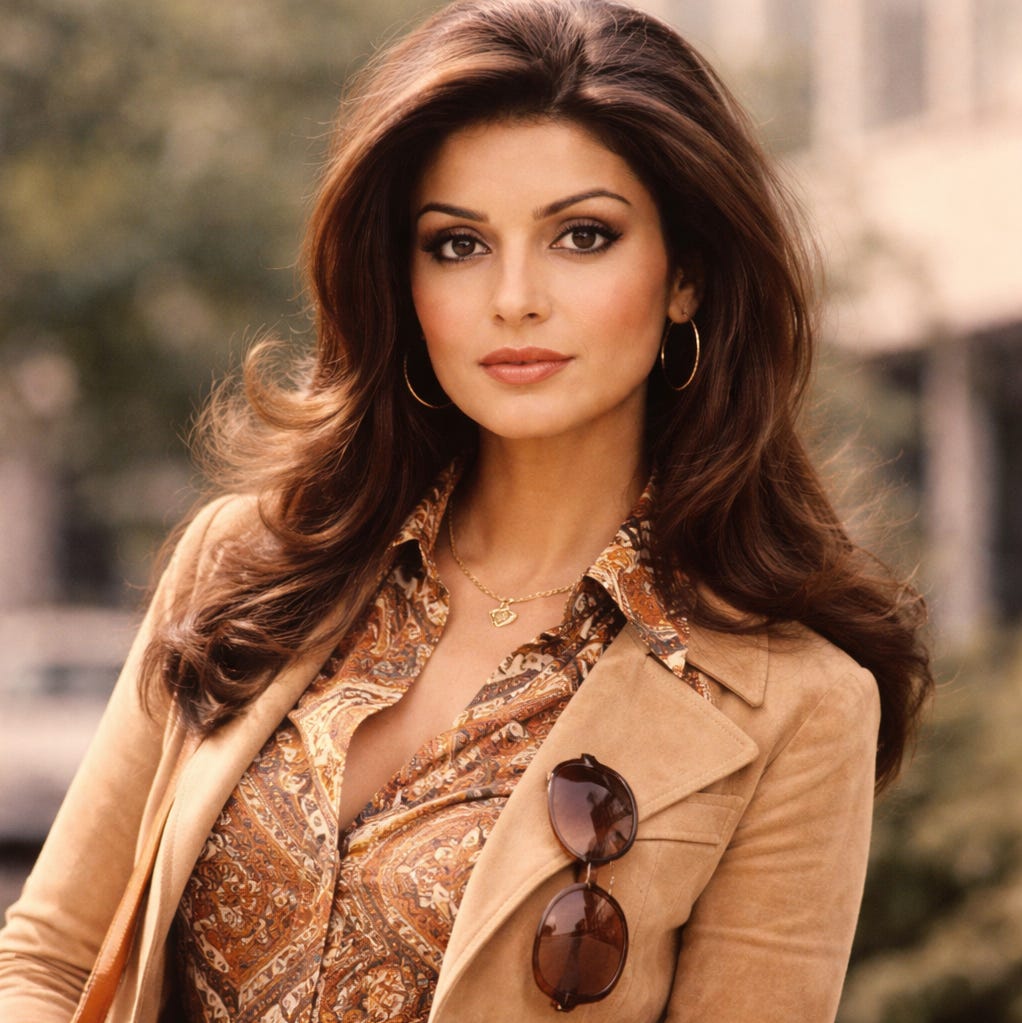
Update: This is a fictional account, a composite derived from very real stories from Iran. I explore Azadeh’s life through mythic truth. —MB
I was free once. My girlfriends and I used to go out singing and dancing for fun, and even try to flirt with guys. Maybe the right man for me was out on the dance floor. I used to sunbathe in a bikini, despite the risks of sunburn.
I was educated and sophisticated. I studied law, but had a secret love of literature from all around the world. I like some of the feminist writers, but I preferred shopping for bras to burning them. Life wasn’t perfect, but it was good. I don’t want to brag, but I was destined for greatness.
That is, until the fundamentalists took over. I had just turned 21.
From then on, life changed for me. My home became my invisible prison within a vast invisible prison complex. A veil of shadows had fallen over us all. I kept my head down, occasionally making eye contact with other ghosts while men in the panopticon watched our every move.
I was no longer a literature-loving lawyer. I had become something less—at least in the eyes of the state. I kept my aspirations to myself.
A lot of people, mostly those with means, got out. I stayed, half because I didn’t have the money, half because I thought surely this wouldn’t last.
Anyway, my sunbathing days were over. Instead, I had to cover myself every time I left the house. If I did not, the morality police would imprison me and likely beat me—or worse, like they did my best friend, Leila. They told her that if she dressed like a whore, she deserved to be treated like one.
After that, she was never the same.
So I mostly kept to myself and lived in fear. A few of us friends would shake our heads and whisper about how awful things had become. Even though it risked turning me into someone’s chattel, I let myself fall in love.
My husband never cared much for the regime, but he knew how to play the game. For men, there was at least a game to play. He was charming. An urban infrastructure designer focusing on bridges. We ended up having two children, one boy and one girl. We made the best of it. And we got by.
My daughter, Roya, gave me hope.
She had been a surprise that came when I was forty. I loved my son, too, but I saw so much of myself in Roya. She had my fire. My zest for life. She was my vision of hope. At least if I couldn’t suck the seeds out of the pomegranate, she might someday. It was meaningful to me to help her see a more promising future.
When she was a teen, I showed her how to put on makeup. In the privacy of our home, we would play dress up and pretend to walk a Paris catwalk. And she was smart. She could do equations in her head without using paper, and could tell you all about the Gathas, reciting some parts verbatim. I could listen to her endlessly.
She was so untidy! But she was beautiful.
One day, Roya learned that a young woman had been killed by the morality police. Without telling me, she sneaked away to protest. I ended up getting a text from her saying she was being pursued by security forces.
That was the last I ever heard from her.
Her body ended up in the morgue with evidence that they had caught up with her and done unspeakable things. After that, my life was no longer worth living. My Roya, my vision of hope, was gone.
So when the big demonstrations came in January of 2026, I went out in them. I screamed, cried, and chanted for the Shah’s return. I wasn’t special, but I wasn’t alone, either. The bazaaris had gone broke, and our money was worthless. The crowds were massive, which I guess inspired many.
But I had already lost hope. I’d seen this film before. For me, I simply didn’t care. I was guilty of moharebeh, I guess. I just wanted to curse them aloud, to get lost in a sea of curses against them.
When the IRGC started killing people outright, disappearing our neighbors, and making examples of us, I knew it was over for me. So, today, January 22, 2026—one day after they hanged 19-year-old Amirhossein Ghaderzadeh—I decided this would be my last communication.
(To my beloved husband and son, I love you. I’m sorry. This is all I have left.)
My last word is my signature.
My name means freedom,
Azadeh
Mad Max, we have her book "The Sky Detective".
Max, this was beautifully written. I initially thought Azadeh was a real woman because of the photo and the Persian letter at the end. It might help readers if you noted somewhere that she’s a fictional composite drawn from real experiences.